
- 24/7 Emergency Dispatch • Serving All Tennessee
Emergency Water Removal
& Extraction In Tennessee
✅ Arrival as Fast as 60 Minutes*
✅ Powerful Submersible Pumps
✅ Direct Insurance Billing
✅ Truck-Mounted Water Extraction
✅ Advanced Moisture Detection
✅ Residential & Commercial
Free assessment · No obligation · Insurance billing available
Licensed & Insured
IICRC Certified
24/7 Emergency Service
Statewide Tennessee
Direct Insurance Billing
- Why Extraction Comes First
Everything else about recovery depends on this one step.
When a pipe bursts or a storm pushes water through your foundation, the instinct is to think about repairs, replacement, and rebuilding. None of that matters until the water itself is gone. Water extraction isn’t one option among many after a flood — it’s the action that determines whether your property has a fast, affordable recovery or a long, expensive one.
Water left standing doesn’t stay put. It travels — wicking upward into drywall, migrating beneath baseboards, working into wall cavities where you can’t see it. What began as a puddle in your kitchen can, within a few hours, become moisture trapped inside your framing, insulation, and cabinetry.
Our job is to remove water at a volume and depth that household equipment was never built to handle — inside the window that actually protects your structure.
We’ve seen homeowners who called within the first hour walk away with a same-day repair, and homeowners who waited a day or two face a multi-week reconstruction for what started as a very manageable situation. That gap is the entire reason this page exists.
Advanced Solutions for Every Scenario
Different types of flooding require distinct tactical approaches. Our specialized teams are equipped to handle any scale of indoor water accumulation:
Standing Water Removal Tennessee: For stagnant pools of water sitting on hardwood, laminate, or concrete surfaces that require immediate containment.
Water Pump Out Service Tennessee: Utilizes high-submersible pumps designed to drain deep pooling from heavily flooded basements and crawlspaces.
Flood Water Extraction Tennessee: Tailored specifically for storm-driven, Category 3 “black water” intrusions that require deep sanitization alongside fluid removal.
When disaster strikes, skipping or delaying Emergency Water Extraction only guarantees that deep-seated moisture will rot wood, rust metal, and ruin your indoor air quality. Securing professional Water Removal and Extraction immediately is the single best choice you can make to protect your investments and restore peace of mind.
- The Physics of a Flood
Why Immediate Water Extraction Matters
When water breaches your property, a ticking clock begins. Understanding the physics behind moisture migration explains why waiting even a few hours can drastically escalate repair costs. Prompt Water Removal and Extraction is not just about cleaning up a mess—it is a critical scientific race against material degradation and structural failure.
The Compounding Dynamics of Standing Water
01
Standing water multiplies by the hour
Even calm-looking water is constantly drawn into drywall, wood, carpet fiber, and concrete. The longer contact continues, the deeper the saturation and the harder the eventual dry-out.
02
Hydrostatic pressure pushes water inward
Water pooling against a foundation builds pressure that forces moisture through hairline cracks and porous block — even after the visible source has stopped.
03
Material saturation changes the math
Every material has a saturation point beyond which it can't be dried in place. Fast extraction is what keeps materials below that threshold.
04
Electrical hazards grow with time
Standing water near outlets or panels is a real shock hazard. A safety assessment happens before any equipment touches the water.
05
Contamination risk compounds
Clean water can become contaminated within hours as it mixes with debris in your walls and flooring. Bacteria multiply quickly in warm, standing water.
04
Insurance expects a fast response
Most policies require reasonable steps to prevent further damage. Prompt, documented, professional extraction protects your claim as much as your property.
- The Physics of a Flood
What happens, minute by minute,
without extraction
When a pipe bursts or a storm floods your property, a destructive timeline is instantly set in motion. This breakdown illustrates what happens to your home or business minute by minute without professional intervention. Every tick of the clock represents a specific threshold that our mitigation technicians monitor closely on every emergency call.
0 MIN
Water enters
Most water is still on the surface — the ideal window for extraction to begin.
15 MIN
Absorption begins
Carpet, upholstery, and paper products start soaking. Documents left in place are often unsalvageable.
1 HR
Finishes suffer
Wood finishes swell. Drywall wicks upward from the baseboard. Dyes bleed onto flooring.
4 HR
Structure compromised
Laminate seams separate. Drywall has wicked several inches. A musty odor may begin.
12 HR
Swelling is obvious
Doors, trim, and cabinetry warp. Metal corrodes. Upholstered furniture is typically beyond saving.
24 HR
Microbial growth
The critical threshold. Mold spores begin actively colonizing damp drywall, insulation, and subfloor.
48 HR
Damage deepens
Subflooring delaminates. Drywall often needs cutting well above the original waterline.
48 HR
Point of no return
Most porous materials are unsalvageable. A same-day dry-out has become a demolition project.
Remove the water before the damage multiplies
- Classification
Understanding water categories & classes
When your property suffers a flood or plumbing failure, a professional restoration team doesn’t just start pumping out liquids blindly. To execute a safe and effective recovery, a technician must first diagnose what is being handled. The industry relies on standardized categories and classes to define the chemical nature and physical behavior of the moisture.
These metrics directly dictate the correct approach to Water Removal and Extraction, the safety protocols required, and whether structural elements can be saved or must be torn out.
The Three Categories of Liquid Contamination
The category of water damage refers to the source of the fluid and its potential level of biological or chemical risk to human health.
Category 1
Clean water
From a supply line or overflowing sink — lowest health risk, but degrades the longer it sits.
Category 2
Gray water
Contains contamination that could cause illness — washing machine overflow, dishwasher discharge.
Category 3
Black water
Grossly contaminated — sewage backups, river flooding. Requires full PPE and containment.
Class 1 — minimal absorption
Class 2 — fast evaporation rate
Class 3 — fastest evaporation rate
Class 4 — specialty drying situations
- The Playbook
Our water removal process
step by step
When liquid breaches your property, an accidental approach will only result in lingering mold and structural rot. To safeguard your investment, professional technicians deploy a disciplined, repeatable sequence derived strictly from industry standardizations and extensive field experience.
Executing a proper Water Removal and Extraction workflow requires a strategic mix of high-velocity machinery and rigorous safety protocols—not guesswork. Below is the precise operational playbook used to reclaim your property from moisture damage.
01
Emergency dispatch
02
On-site inspection
03
Safety assessment
04
Moisture mapping
05
Truck-mounted extraction
06
Portable extraction
07
Submersible pump deployment
08
Industrial wet vacuum pass
09
Moisture monitoring
10
Initial drying preparation
11
Final inspection & handoff
Scalable Restorative Action Across Tennessee
Whether handling a localized bathroom leak or executing extensive Commercial Water Extraction across an entire industrial warehouse, following a strict process is essential. For property owners facing severe regional storms, securing specialized Flood Water Extraction Tennessee through an established Water Removal Company Tennessee ensures that every stage of this playbook is executed flawlessly.
To understand the rigorous regulations governing this step-by-step methodology, you can review the official standard-setting guidelines via the Institute of Inspection Cleaning and Restoration Certification (IICRC).
- In The Truck
Advanced Equipment Used for Professional Water Removal and Extraction
When water damages your home or business, the gap between a successful restoration and an expensive mold outbreak comes down to the equipment deployed on your floors. True Water Removal and Extraction is a highly scientific discipline requiring professional-grade technology. While a standard shop-vac or a household mop might seem like an option for a small spill, they lack the lift, lift-volume, and deep suction required to pull moisture out of hidden structural layers.
Professional crews roll up to your property with a specialized fleet of industrial tools engineered specifically for rapid, deep-tissue Water Removal and Extraction. Here is a detailed look at the heavy-duty gear our teams carry in the truck to handle disasters of any scale.
High-Volume Fluid Extraction Systems
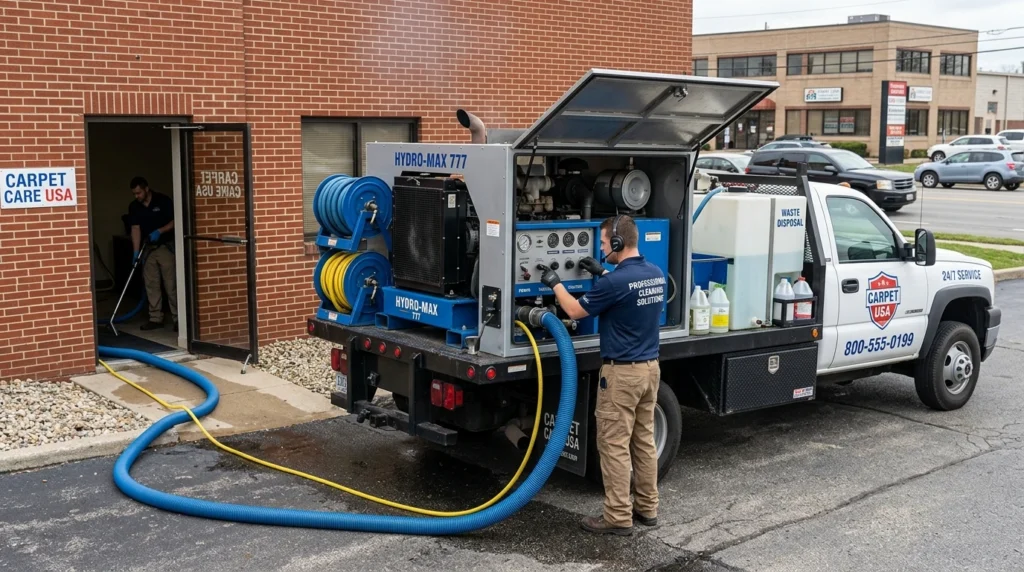
Truck-Mounted Extractors
The frontline defense against major interior flooding is the truck-mounted extraction unit. These massive systems are powered directly by the vehicle’s engine, delivering extreme vacuum pressure and continuous runtime that portable electric tools simply cannot match. For whole-floor restoration or large-scale jobs, these machines allow a Water Removal Company Tennessee to pull out thousands of gallons of liquid without needing to stop to empty small holding tanks. This ensures your primary Water Removal and Extraction phase is executed with maximum speed.
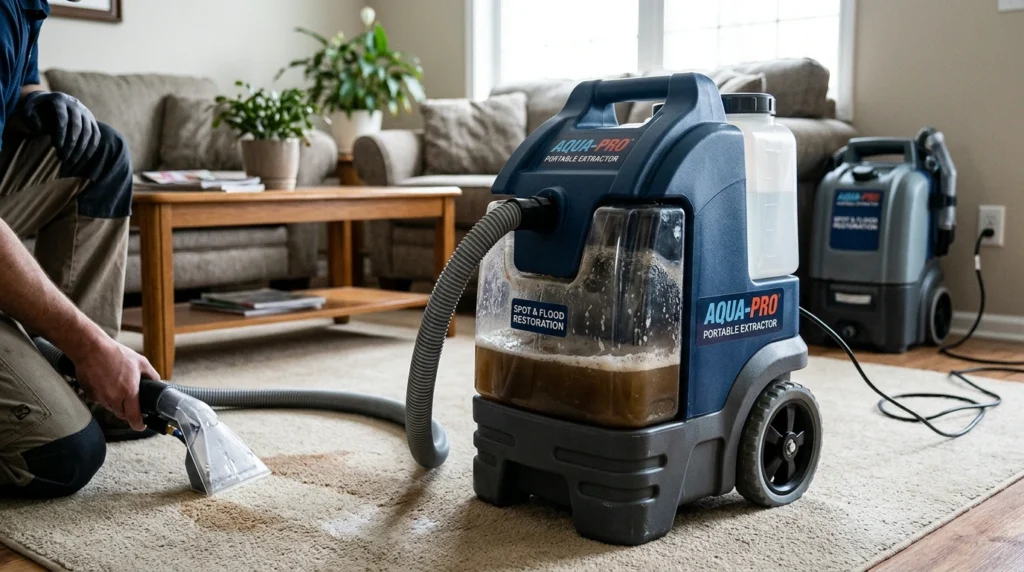
Portable Extractors
Not every flooded room is easily accessible from a driveway or parking lot. For multi-story apartment complexes, high-rise commercial offices, stairs, and tight interior spaces, technicians rely on self-contained portable extractors. These agile units provide commercial-grade suction and localized maneuverability. They ensure that complete Water Extraction Services Tennessee can be performed effectively anywhere on your property, regardless of physical or architectural constraints.
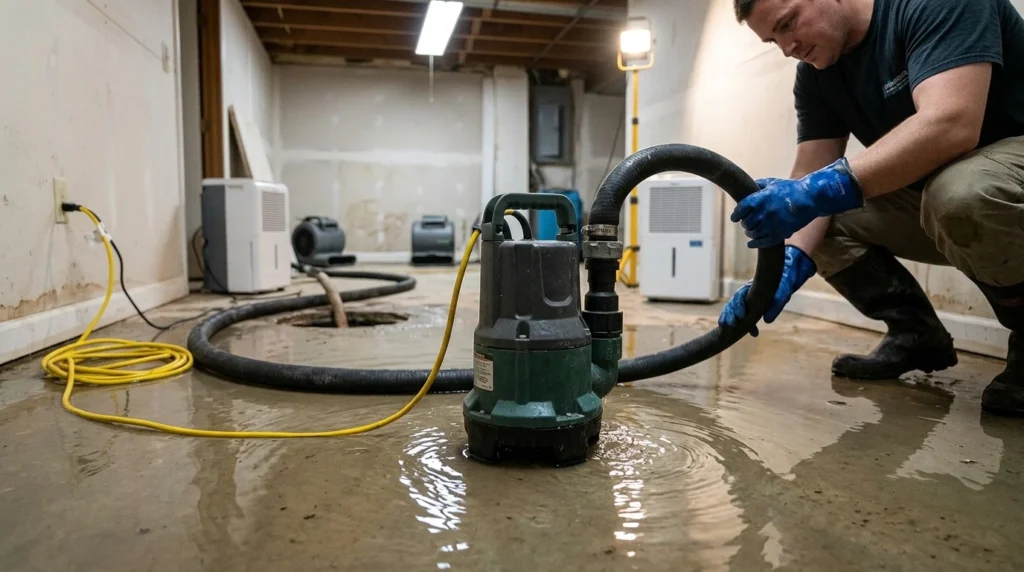
Submersible Pumps
When dealing with deep, multi-inch pooling in a flooded basement or low-clearance crawl space, heavy-duty submersible pumps are dropped directly into the water. Engineered to run completely submerged, these pumps quickly move massive volumes of liquid out of the structure. Initiating this industrial Water Pump Out Service Tennessee clears bulk floodwaters quickly, preparing the area for finer extraction tools.
Deep-Subsurface Extraction Tools
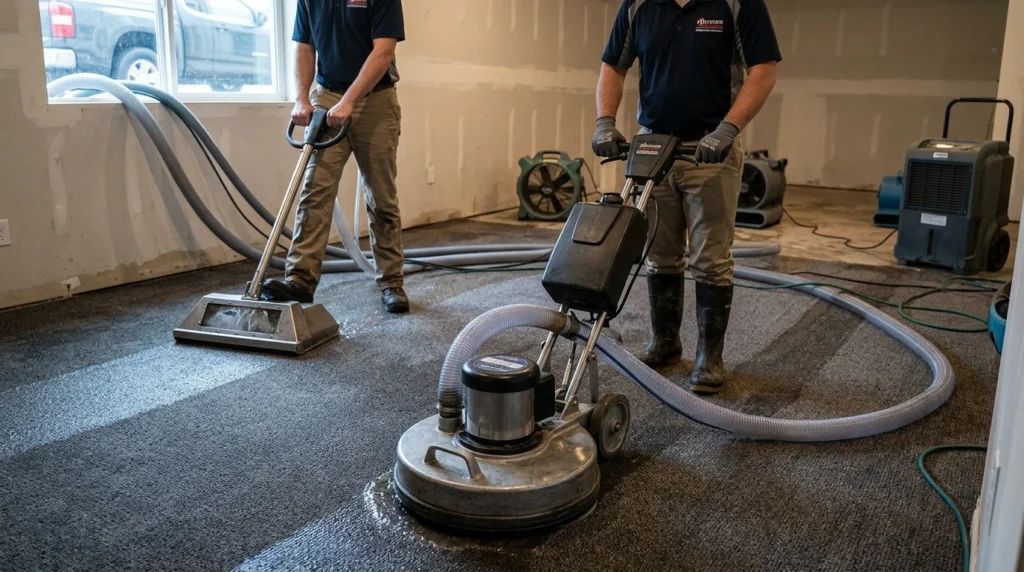
Weighted Extraction Tools
Surface water is only half the battle. When carpets and thick under-padding are saturated, moisture becomes trapped like a giant sponge. Weighted extraction tools, often called ride-on extractors, utilize the technician’s own body weight to compress the carpet fibers and padding. This downward compression forces deeply trapped water up and out into the vacuum system, ensuring that comprehensive Emergency Water Removal Tennessee reaches the lowest layers of your flooring.
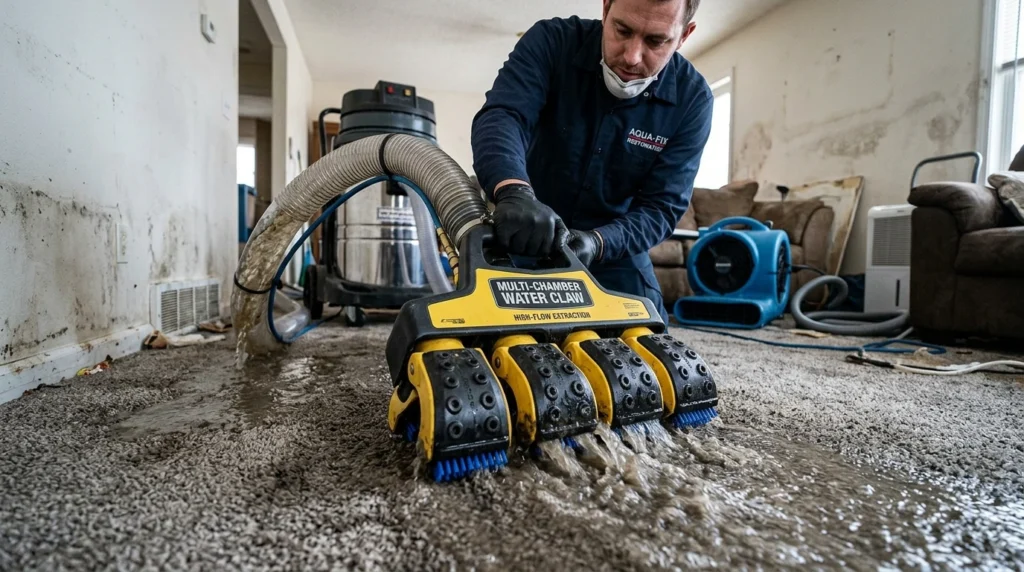
Multi-Chamber Water Claws
For targeted sub-surface extraction in tight spots, corners, and along walls, technicians deploy specialized water claws. These multi-chambered tools utilize a tight seal against the floor to draw water from both the carpet and the underlying pad simultaneously without needing to lift the carpet completely. This saves time and minimizes structural disruption during critical Emergency Water Extraction windows.
Precision Diagnostic and Monitoring Technology
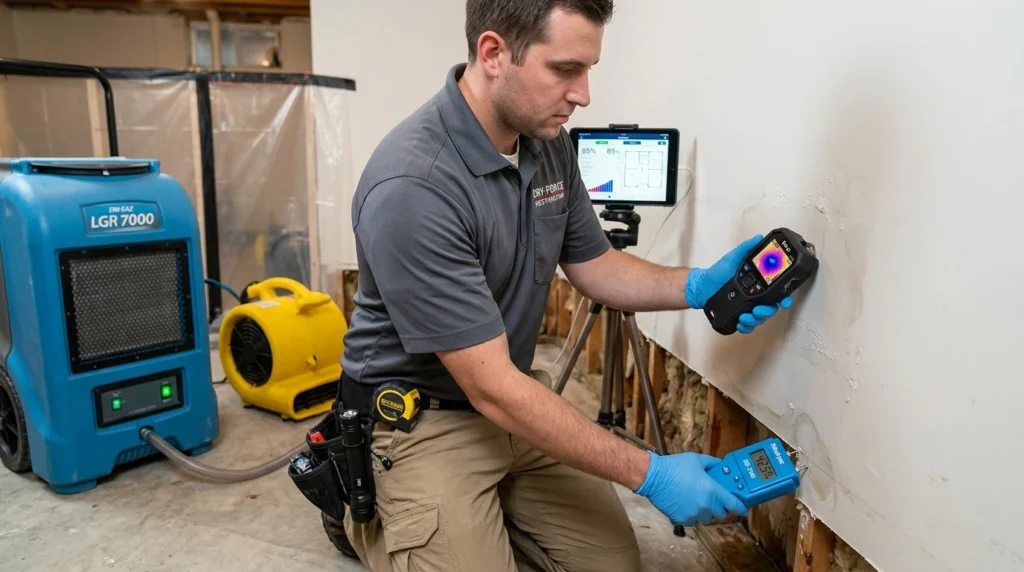
Advanced Moisture Meters
Restoration professionals never rely on visual guesswork. Technicians use advanced moisture meters, utilizing both pin-type probes (for deep structural penetration) and non-invasive pinless scanners (to prevent cosmetic damage). These instruments measure the exact moisture content inside drywall, hardwood floors, and concrete. This allows us to establish a clear data baseline for your ongoing Water Removal and Extraction strategy.
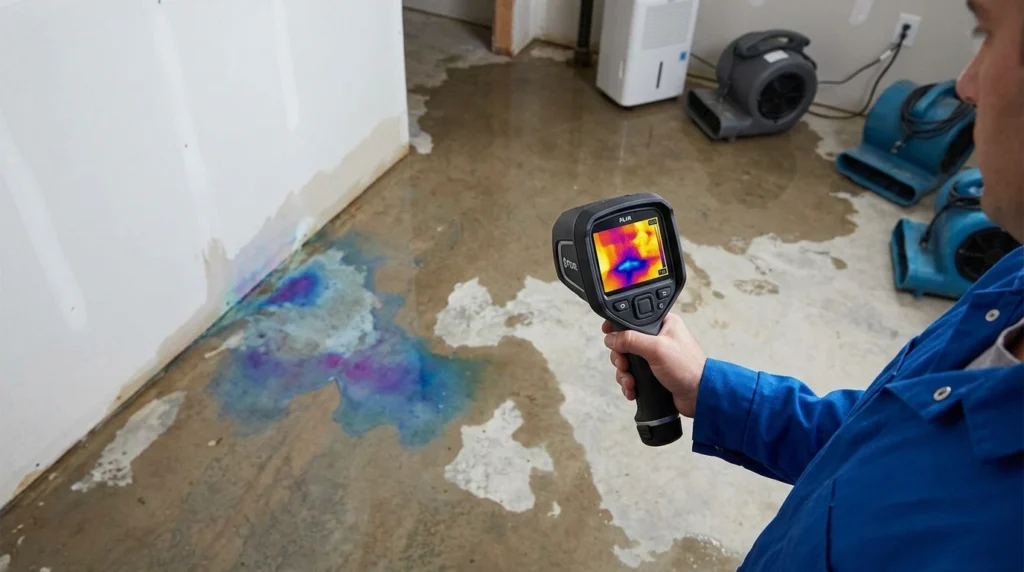
Infrared Thermal Imaging Cameras
Water frequently travels along hidden pathways inside wall cavities and underneath subfloors where it cannot be seen. High-resolution thermal imaging cameras detect subtle temperature differentials caused by moisture evaporation. By revealing these hidden pockets of migration, our teams can execute precise Standing Water Removal Tennessee and prevent pocketed structural rot from developing behind your baseboards.
Structural Drying and Dehumidification Systems
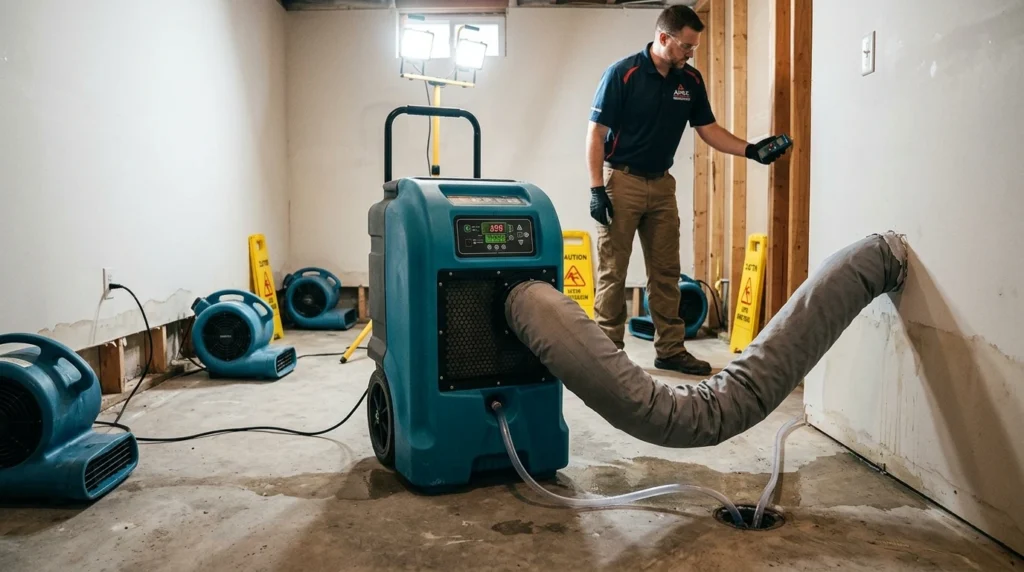
Low-Grain Refrigerant (LGR) Dehumidifiers
Once bulk liquids are removed, the environment must be dried dynamically. Industrial LGR dehumidifiers are designed to pull water vapor out of the air efficiently, even when ambient humidity drops during the final phases of drying. By keeping the surrounding air dry, these units accelerate the natural evaporation rate of the remaining moisture trapped inside your walls, providing crucial structural protection during a Commercial Water Extraction or large residential project.
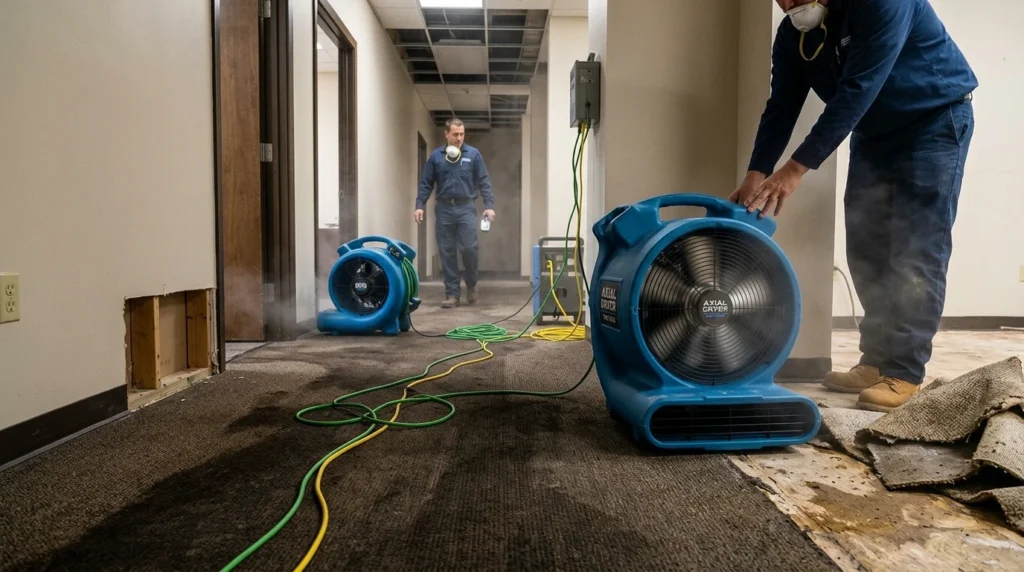
High-Velocity Axial Air Movers
To maximize the efficiency of dehumidifiers, high-velocity axial air movers are strategically positioned throughout the room. These fans are engineered to sweep high-volume airflow directly across wet walls, ceilings, and floors. This constant air movement breaks up the stagnant boundary layer of humidity on wet surfaces, directing moisture out into the room and straight toward the dehumidifiers for final capture.
Whether you are recovering from local plumbing failures or dealing with widespread regional storm damage, using the correct tools is crucial. Deploying specialized Flood Water Extraction Tennessee machinery immediately protects your structural assets from permanent ruin. To understand the strict standards governing professional restoration equipment and methodologies, you can review the official resource guides provided by the Restoration Industry Association (RIA)
- Homes
Residential Water Removal Across Tennessee
A flooded home doesn’t just threaten your property — it threatens the place where your family eats, sleeps, and lives. When you call for a flooded basement, a burst pipe upstairs, or a washing machine hose that gave out overnight, our first priority is stopping the spread.
Basements combine standing water with hydrostatic pressure from saturated soil outside. We clear bulk water with submersible pumps, then follow with extraction to pull remaining moisture before it wicks into framing or insulation.
Crawl spaces are low-clearance and easy to overlook until a musty smell tips off a problem. Standing water there can sit undetected for weeks, saturating joists and insulation from below.
Upstairs floods
Water travels downward through ceilings and walls — we move fast in every room below the source, not just where it started.
Kitchens & bathrooms
Supply line and appliance leaks often go unnoticed for days, spreading beneath cabinetry before discovery — exactly why moisture mapping matters.
Care for your home
We protect unaffected areas from foot traffic and equipment, and explain each step so you’re never left wondering what’s next.
- Business
Commercial water extraction, built to minimize downtime
For a business, a water event isn’t just property damage — it’s lost revenue and disrupted operations. Commercial jobs often mean deploying multiple truck-mounted units simultaneously with a larger crew to clear large square footages fast.
Retail environments carry the added pressure of customer-facing space that needs to reopen quickly. We work in phases so parts of the business can reopen while extraction continues elsewhere.
Occupied facilities
Medical facilities, schools, and hotels bring operational constraints we’re experienced coordinating around, including active occupancy.
Warehouses & inventory
Large open floor areas put stored goods at risk — we prioritize moving or elevating inventory alongside extraction.
Clear communication
Facility managers and business owners get real-time information to make decisions about reopening and staffing.
Whether your commercial facility is battling an localized plumbing rupture or requires massive Emergency Water Removal Tennessee after an intense regional storm, securing a certified team is critical. Immediate, professional Emergency Water Extraction is the single most effective action you can take to reclaim control of your enterprise, mitigate your financial losses, and safely restart operations.
- Root Cause
Common causes of
water damage we respond to
Water damage is rarely predictable, but its origins usually follow a familiar set of plumbing, appliance, or weather-related failures. Understanding what caused a moisture breach is critical because the source of the leak determines the contamination category and directly influences the strategy for Water Removal and Extraction.
No matter where the leak originates, stopping the water at its source is only half the battle. The remaining moisture must be completely extracted to prevent deep structural decay and toxic mold growth. Below is a detailed breakdown of the most common root causes our teams respond to across the state.
Burst pipes
Aging plumbing or corrosion releases large volumes fast, often before anyone realizes.
Frozen pipes
Winter cold snaps freeze exposed lines; the leak surfaces only once the ice thaws.
Water heater failures
A failed tank can release dozens of gallons in minutes in a utility closet or basement.
Washing machine hoses
Supply hoses under constant pressure can burst and run for hours while you're away.
Dishwasher leaks
Worn seals or cracked hoses leak slowly under a cabinet, unnoticed until damage is visible.
Roof leaks
Storm damage or failed flashing lets water travel down through insulation and ceilings.
Severe storms
Heavy rainfall overwhelms drainage, forcing water through foundation walls and thresholds.
Foundation seepage
Hydrostatic pressure forces groundwater through hairline cracks in the foundation.
Toilet overflows
A clogged line or bad fill valve causes repeated overflow, sometimes Category 2 or 3 water.
Sump pump failures
A failed pump during heavy rain lets a protected basement flood rapidly.
HVAC condensation leaks
A clogged drain line leaks steadily in attics or closets until it reaches a ceiling below.
Broken supply lines
Lines feeding sinks and appliances fail from age, releasing water at a steady, hidden rate.
Specialized Emergency Response Across Tennessee
Managing large-scale corporate infrastructure or multi-story buildings requires a unique approach compared to a standard home. If an industrial plumbing line fails inside a warehouse, a team must mobilize dedicated Commercial Water Extraction units to prevent total operational shutdown.
According to the Centers for Disease Control and Prevention (CDC), any wet structural material must be completely dried within 24 to 48 hours to prevent the growth of hazardous mold spores. Securing professional Water Removal and Extraction services immediately is the most reliable way to beat this clock.
Always On
24/7 emergency dispatch, statewide across Tennessee
Our line is staffed around the clock, including holidays. The moment you call, we begin coordinating the nearest available crew to your address.
- Do The Math
The true cost of waiting to call
A supply line fails overnight. If extraction begins that same morning, the job is often limited to removing standing water and drying flooring and lower cabinets — a few days, contained to one area.
Wait until the weekend instead, and the water has wicked up the drywall, the subfloor has begun to swell, and a musty smell has developed. What could have been a drying job now requires cabinet removal, drywall replacement, and subfloor repair — weeks instead of days, at multiples of the cost.
The materials in your home don't wait for a convenient time to be damaged further.
- Credentials
Why Tennessee homeowners &
businesses choose us
LICENSED
Licensed extraction professionals
Every technician meets Tennessee's licensing requirements for this work.
INSURED
Fully insured for your protection
Comprehensive coverage protects you if anything goes wrong on site.
CERTIFIED
IICRC-certified technicians
Our processes are grounded in industry standards insurers recognize.
EQUIPPED
Commercial-grade equipment
Truck-mounted extractors and thermal imaging on every single call.
DOCUMENTED
Insurance assistance included
Photos and moisture logs your adjuster expects to see, every time.
STATEWIDE
Rapid statewide response
Crews positioned to arrive quickly anywhere in Tennessee.
- Coverage
Service areas across Tennessee
We provide rapid-response dispatch across the entire state. Our crews are strategically positioned throughout Middle, West, and East Tennessee to arrive quickly, minimizing the overall spread of water damage.
● Nashville& Surrounding Metro Areas
● Knoxville & East TN Communities
● Clarksville & Montgomery County
● Franklin & Williamson County
● Johnson City & The Tri-Cities Region
● Memphis & Shelby County
● Chattanooga & Southern Border Towns
● Murfreesboro & Rutherford County
● Jackson & West TN Communities
● Hendersonville & Sumner County
...and All Major Cities, Counties, Towns & Communities Across Tennessee
- While You Wait
What to do before we arrive
Steps you can safely take to limit further damage — only if it's safe to do so.
01
Shut off the water source if you can safely access the valve
02
Turn off electricity to the area if it's safe to reach the breaker
03
Move valuables and furniture to a dry area quickly
04
Avoid walking through water near outlets or appliances
05
Don't use a household vacuum not rated for wet pickup
06
Take photos of the damage for insurance records
07
Remove small rugs or loose items if safe to reach
08
Keep pets and children away until we've assessed the area
- Paperwork, Handled
Insurance assistance for your claim
We maintain detailed moisture logs throughout the job, tracking readings from initial inspection through final drying confirmation, and photograph the damage extensively before and during the work.
We stay in communication with your insurance company where needed, providing the reports they request. We can't guarantee coverage decisions — that's your provider's call — but our documentation is built to support your claim, not leave you to piece it together.
Frequently Asked Questions
How long does water extraction take?
Most residential extractions are completed within one to three hours, depending on the size of the affected area and water volume. Larger commercial losses can take longer.
How much water can your equipment remove?
Truck-mounted units and submersible pumps can move hundreds of gallons per hour, far exceeding household equipment.
Can I stay in my home during extraction?
In most cases, yes — especially if the area is contained. If contamination or extensive flooding is involved, we’ll advise on any precautions needed.
Does insurance typically cover water extraction?
Many policies cover sudden, accidental water damage, though it varies by policy and source. We provide documentation to support your claim.
Do carpets always need to be removed after a flood?
Not always. If extraction happens quickly and saturation is limited, carpet and padding can often be dried in place.
How fast should extraction begin after a flood?
As soon as possible — ideally within the first few hours, before the 24-hour mold-risk threshold.
Is standing water actually dangerous?
Yes — electrical shock risk near outlets, slip hazards, and contamination depending on the source.
Can wood floors be saved after water damage?
Solid hardwood has a better chance than engineered wood or laminate, particularly with fast extraction.
What's the difference between Category 1, 2, and 3 water?
Category 1 is clean water. Category 2, or gray water, carries contaminants. Category 3, or black water, is grossly contaminated and requires more precautions.
Will you work directly with my insurance company?
Yes — we provide moisture logs, photos, and reports formatted for insurance review, and communicate with adjusters as needed.
Do you serve areas outside major Tennessee cities?
Yes, our coverage extends statewide across Middle, West, and East Tennessee.
What if I don't know where the water is coming from?
That’s part of our inspection — technicians are trained to trace water back to its source.
- Right Now